

A gemstone is beautiful, but since beauty lies in the eye of the beholder: any beautiful and rare mineral or organic material (such pearl, coral, or jet) is considered a gemstone.
Rocks vs. Gemstones
Gemstones and rocks are both made from minerals. Gemstones differ from rocks in that gemstones consist of a single mineral, while rocks are composites of many minerals. Most minerals combine to make rocks. But some minerals form in isolation and become beautiful. There are about 3000 different minerals. Only about 150 minerals are considered gemstones, and more than half of those are too fragile to wear as jewelry.
Precious vs. Semi-Precious
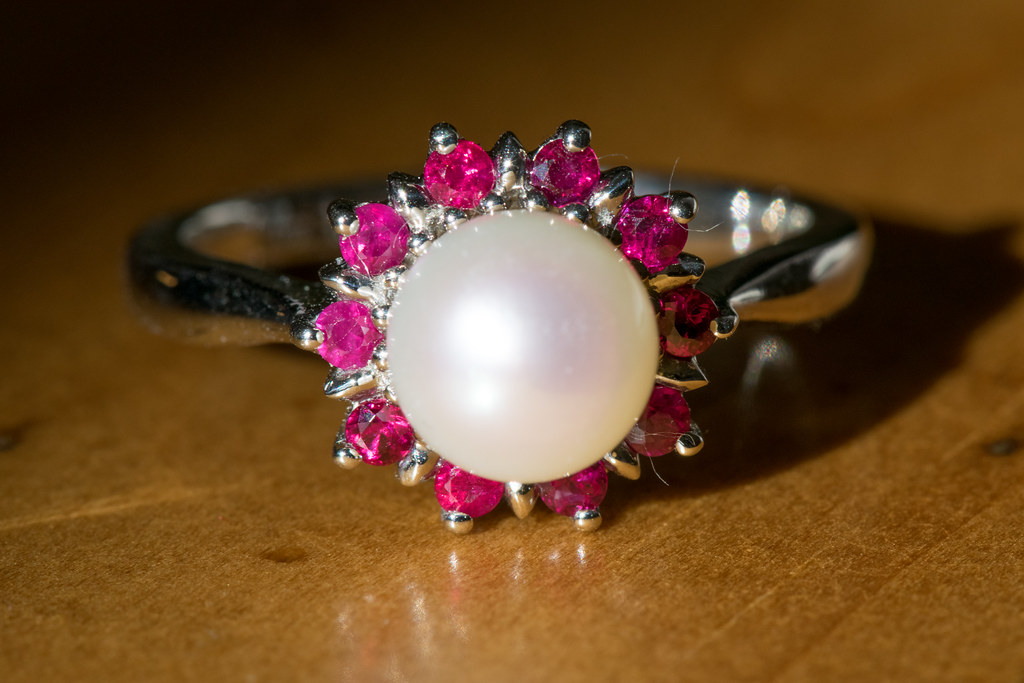
Tradition dictates that gemstones be divided into precious and semi-precious classes. The four generally accepted precious gemstones are diamond, ruby, sapphire and emerald. Everything else is referred to as semi-precious. Some organic materials—such as amber, jet, coral and mother-of-pearl—are also referred to as gemstones. Organic gemstones are not really stones at all; rather they are made from living things, such as plants, animals, and seashells.
What determines the value of a gemstone?
Not every beautiful mineral is valuable. Even labels such as precious or semi-precious do not determine the value of a gemstone. Diamonds, for example, are considered precious gems, while amethyst gemstones are considered semi-precious. Obviously, diamonds are generally more valuable than fluorite, but fine amethyst gemstones may be more valuable than imperfect diamonds. The economic value of a gemstone depends on the combination of factors including rarity, durability, color, clarity, weight, and cut and polish.

Rarity
Rarity is a factor of market value: scarcity increases value.
Durability
Durability is especially important for gemstones used in jewelry. A gemstone must be sturdy enough to withstand constant use without getting scratched, chipped, or damaged. The most durable gemstone is diamond. Diamonds are so hard that they are often used industrially to cut steel. Even so, perfect diamonds can still become damaged.

Color
Even gemstones of similar mineral makeup often come in a variety of colors. In general, the truest, deepest colors are more valuable.
Tourmaline gemstones, for example, come in colors ranging from pink/red, brown, blue, green, yellow and black. Black tourmaline is very common, and while often quite beautiful, black tourmaline is not very valuable. Green and pink/red tourmalines are also very common, but deep emerald green, true ruby red, and the rare Paraiba blue varieties are more valuable.
Clarity
As with diamonds, clarity is an important feature of many translucent gemstones: the higher the clarity, the higher the value. With diamonds, inclusions are usually considered flaws. Natural inclusions—sometimes referred to as jardin after the French word for garden—are not necessarily considered faults but provide evidence of the stone’s authenticity. The only way, for example, to tell the difference between a synthetic emerald and a natural emerald is by looking for the characteristic cloudy inclusions found only in natural emeralds.
Weight
The weight of a gemstone is sometimes measured in carats. One carat weighs 200 milligrams. 1000 milligrams weighs about 35 one-thousandths of an ounce. Weight alone is not a good measure of value.
Cut & Polish
Gemstones are cut and polished to show off their best features. The cut of a stone depends upon the skill of the cutter, the shape of the stone, and the mineral makeup of the stone. Skilled gemstone cutters will also take into consideration interesting inclusions or imperfections and cut accordingly. Clean, sharp, and uniform cuts increase the value of a gemstone.
The mineral makeup of a stone will determine the type of cut it is able to take. Stones that are so soft or brittle that they do not facet well, may be found in polished rounds or chunks. Other gemstones just look better without facets. The natural silky, waxy, or banded surface of jade, carnelian, amazonite, and malachite, for example, looks better when smoothly carved and polished. A well-polished gemstone should look wet and shiny.

 Flora Jewels