
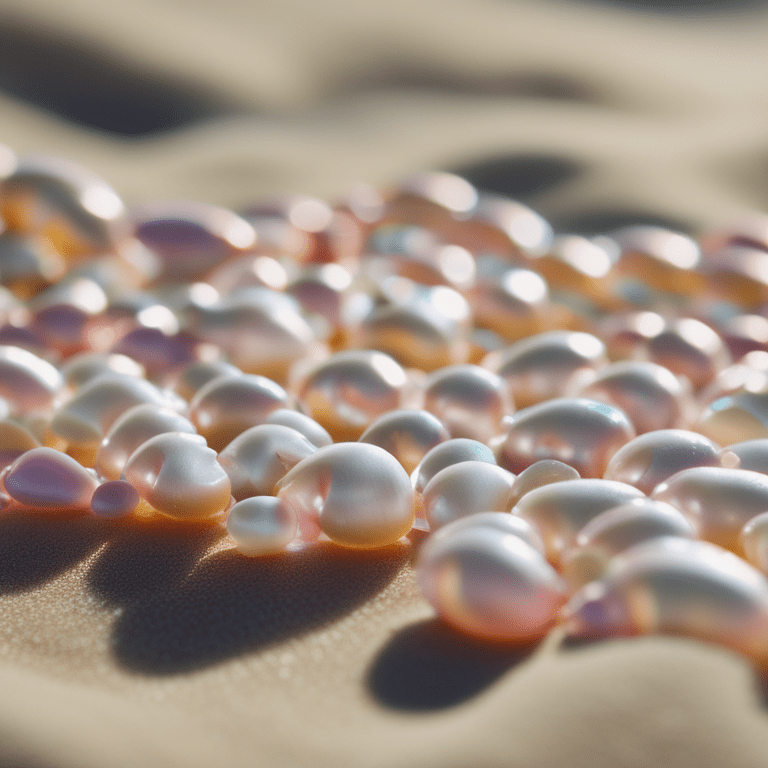
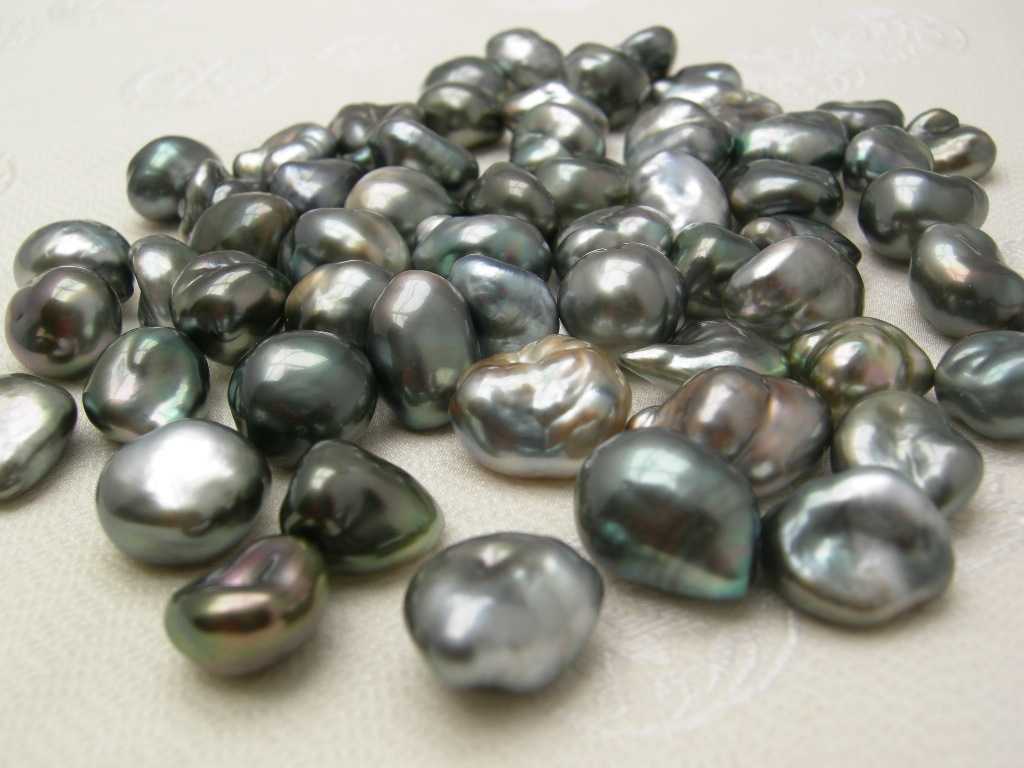
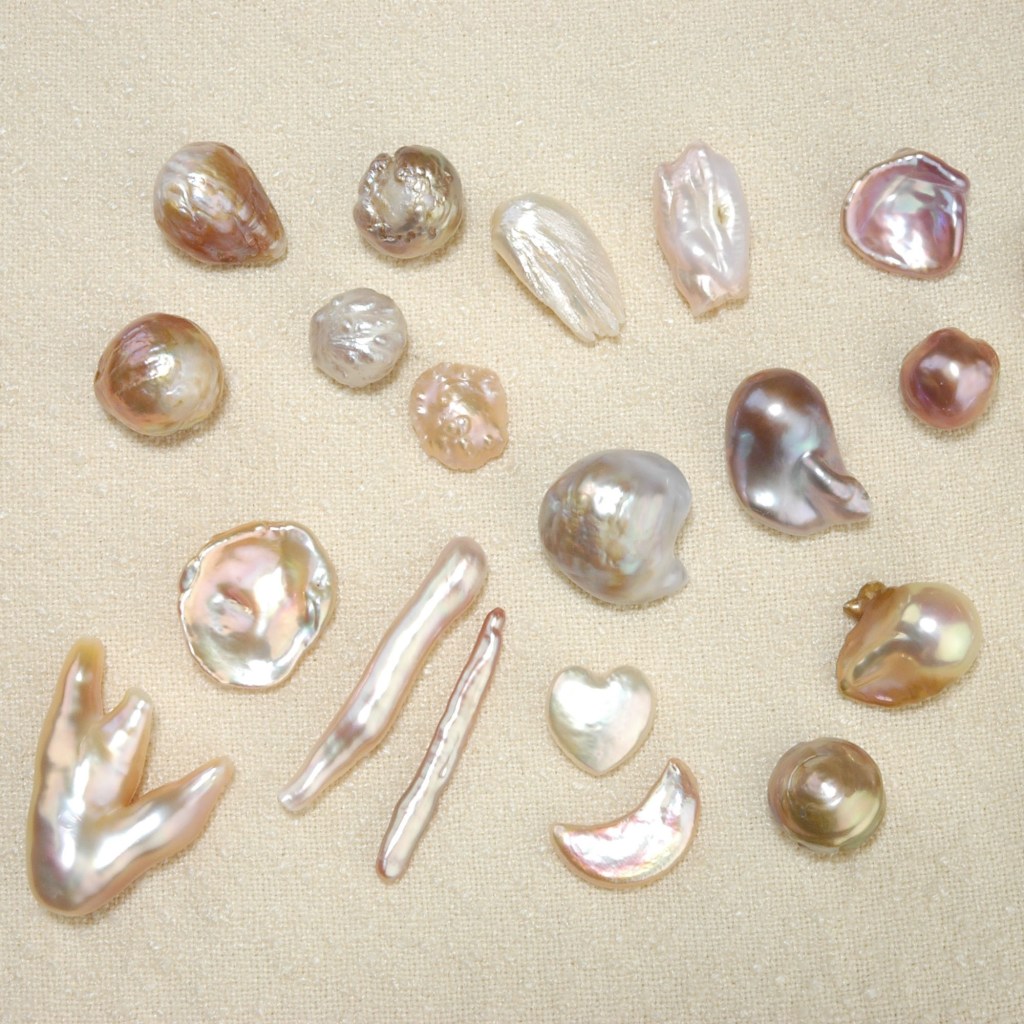
A freshwater pearl is formed in the same way as a saltwater pearl. When a tiny foreign body, such as a grain of sand, invades a shellfish, the shellfish deposits layers of a substance called nacre around the foreign body. Many thousands of layers of nacre harden to create a small iridescent pearl. Both cultured freshwater and saltwater pearls are formed when a foreign body is artificially introduced to a shellfish. By far, most freshwater pearls on the market today are cultured. Freshwater pearls may be spherical in shape or distinctly irregular, such as those referred to as baroque or potato-shaped. Their natural color is much the same as the inside of the shellfish in which the pearl forms and may range from white to cream, pink, purple, grey, or brown. Black or darkly colored freshwater pearls have probably been irradiated. Irradiation is a common and strictly regulated process that is safe and relatively permanent. High heat or strong light may fade the dark colors.
Native American Freshwater Pearls
Native Americans of the Atlantic Coast and of the Mississippi River Basin were the first Americans to collect and use freshwater pearls and mussel shells as adornment. Pearl pendants and earrings were worn by both sexes, and both pearls and shell were used to decorate clothing. In some tribal nations, freshwater pearls were also used as currency. Lewis and Clark reported that Powhattan, Pocahontas’ father, received in tribute large stores of freshwater pearls.
Pearls Before Mikimoto
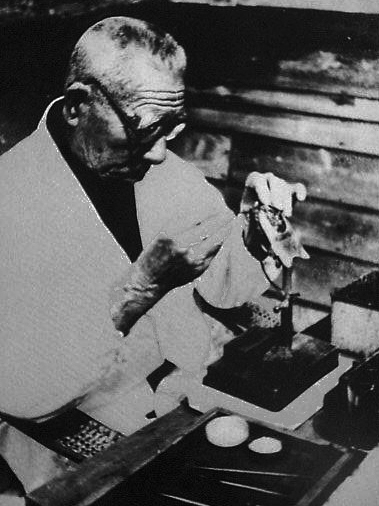
Since Roman times, natural pearls were the most valued and important gemstone. Until 1916, when Kokichi Mikimoto developed a reliable method of pearl cultivation, pearls were hunted in the shallow seas of the Indian Ocean and the South China Sea. In every ton of pearl oysters and mussels harvested maybe three or four quality pearls were found.
Pearl: Like a Drop of Dew
In ancient times. Pearls were thought of as being formed by dew drops falling into the ocean. Richard Trench (d. 1863), poet and archbishop of Dublin wrote of the pearl as dew upon the ocean seas:
A dewdrop, falling on the wild sea-wave,
Exclaimed, with fear, ‘I perish in this grave’;
But in a shell received, that drop of dew
Unto a Pearl of marvel’ous beauty grew,
And, happy now, the grace did magnify
Which thrust it forth—as it had feared—to die;
Until again, ‘I perish quite,’ it said,
Torn by rude divers from its ocean bed;—
Oh unbelieving! So it came to gleam
Chief Jewel in a Monarch’s diadem.
Trench also wrote of pearl as being the “chief jewel in a monarch’s diadem”, referring to the fact that before Mikimoto, only the very wealthy and indeed rulers of the land could afford to wear pearls.
Cleopatra: The Most Expensive Banquet in History
In the realm of history’s grandest banquets, a saga of opulence and persuasion unfurled. At its heart: Cleopatra, Egypt’s queen, and a daring wager with Rome’s Marc Antony. With pearls as her pawns, she aimed to prove Egypt’s supremacy over conquest.
In a lavish spectacle, Cleopatra dined with an empty plate and a wine-filled goblet. Then came her audacious move: she crushed a pearl from her earring, dissolving it in the wine, and boldly drank the mixture. Antony, amazed, forfeited his own pearl, admitting her victory.
Pliny, chronicler of the natural world, recorded these pearls’ value—60 million sesterces, or 1,875,000 ounces of silver. Translated to today’s standards, around $41 million. Thus, pearls transformed from gems to emblems, immortalizing Cleopatra’s audacity and triumph.
Pearls of the New World
Queen Elizabeth I (d. 1603) was famous for her long strands of large natural pearls. During the time of Queen Elizabeth I, world exploration expanded into the Western Hemisphere, and vast beds of pearl oysters were found along the shores of the New World in Venezuela and Columbia.
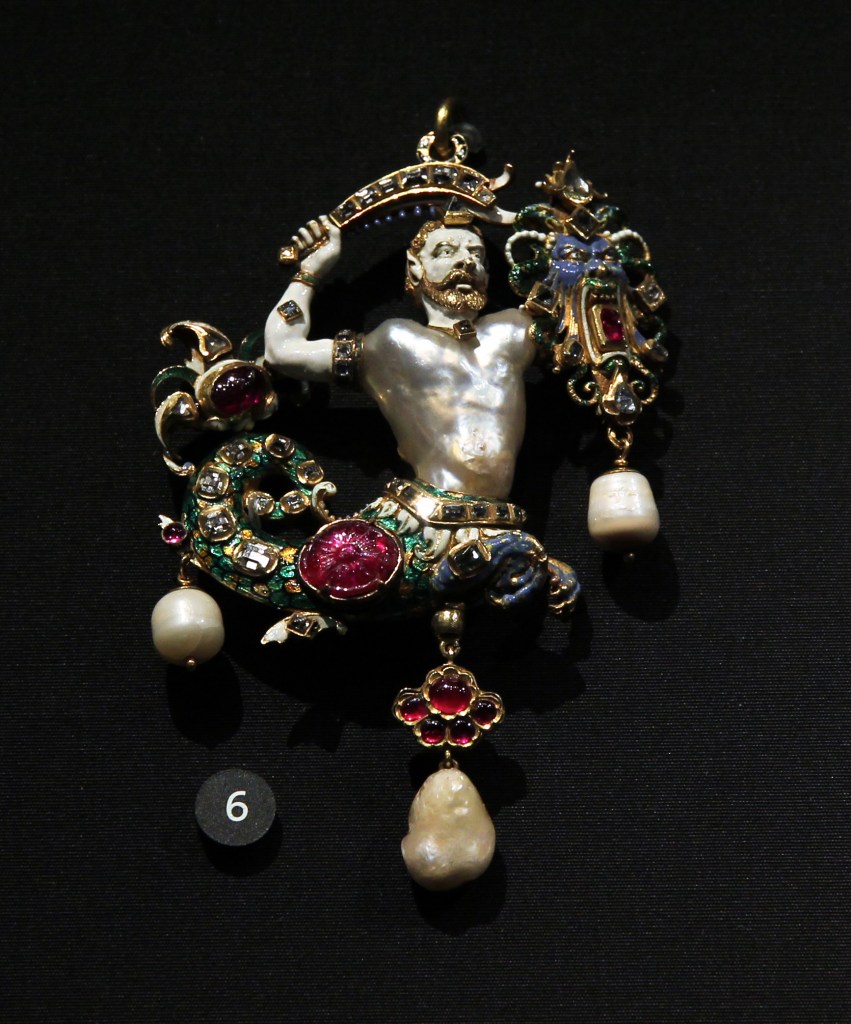
Weird, Irregular Shapes
The problem with many of the pearls found in the New World was that they were found in weird, irregular shapes, called baroque. Pearl dealers at the time didn’t know what to do with baroque pearls.
Animal, Dragon, and Mermaids
Enterprising craftsmen began to consider the shape of these weird baroque pearls and started making sculptured pendants adding colored gemstones and enamel to make birds, animals, flowers, dragons, and mermaids. Soon sculptured pendants made of baroque pearls were all the rage.
Symbolism
Pearl is the official state gemstone of the states of Tennessee and Kentucky. Pearl is the traditional birthstone for those born in the month of June. Pearl is also suggested as a gift for the 3rd and 30th wedding anniversaries.

 Flora Jewels


