

Opal comes in two forms, precious opal that displays the play-of-color phenomena called opalescence, and common opal that does not. Opal, like quartz, is form of silica, but opal differs from quartz in that opal is a non-crystalline silica mineraloid with high water content, usually 3-20%. Opal also has a different internal structure than quartz. While quartz has an inner crystalline structure, opal is made of closely packed round spheres of silica. As light reflects and refracts through the spheres it causes interference, which creates the play-of-color phenomena called opalescence.
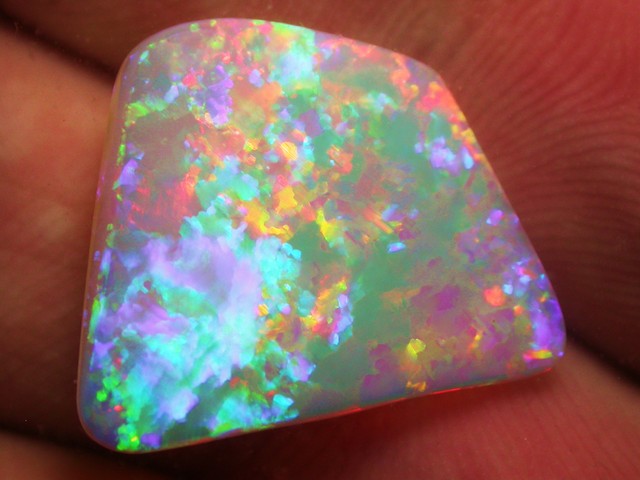
There’s some discrepancy about where opal gets its name. It may get its name from the Sanskrit word upala which means “jewel” or from the Greek word opallios which means “to see a change in color”. The Latin term for opal was opalus.
The opal is a traditional birthstone for those born during the month of October and is a wedding gift for the 24th and the 34th wedding anniversaries. The black fire opal is the official gemstone of Nevada, and opal is Australia’s national gemstone.
Opal was very rare and extremely valuable in antiquity. In Europe, it was a gem prized by only by royalty. Until vast deposits of opal were found in Australia in the 19th century the only known source was beyond the Roman frontier in Červenica, Slovakia. Today, Australia produces 95% of Earth’s precious opals, but significant deposits are also found in Ethiopia, the Virgin Valley in Nevada, and Mexico. In late 2008, NASA announced the discovery of opal deposits on Mars.
Arabic Opal
In Arabic folklore, opals are said to descend from the heavens in flashes of lightning.
Greek Opal: Zeus’s tears
Greek mythology gives us a creation myth for opal when it describes opals as the tears of Zeus. In Greek mythology, there waged a great war between Zeus and his Olympian siblings and their father cruel Cronus and the other Titans. To aid in the war effort, Zeus freed from Tartarus the three Cyclopes and the Hundred-Handed Giants. To show their gratitude, the Cyclopes and the Giants forged a special weapon for Zeus: his famous thunderbolt. The Titan and the Olympians engaged in fierce battle. Zeus used his new weapon to strike down his father Cronus and capture him. After emerging victorious, Zeus was filled with grief for the loss of his father and wept great tears. When his tears hit the ground, they turned into beautiful opals.
Ancient Greeks also believed that owning an opal granted the gift of prophecy and shielded one from the clutches of disease.
Roman Opal
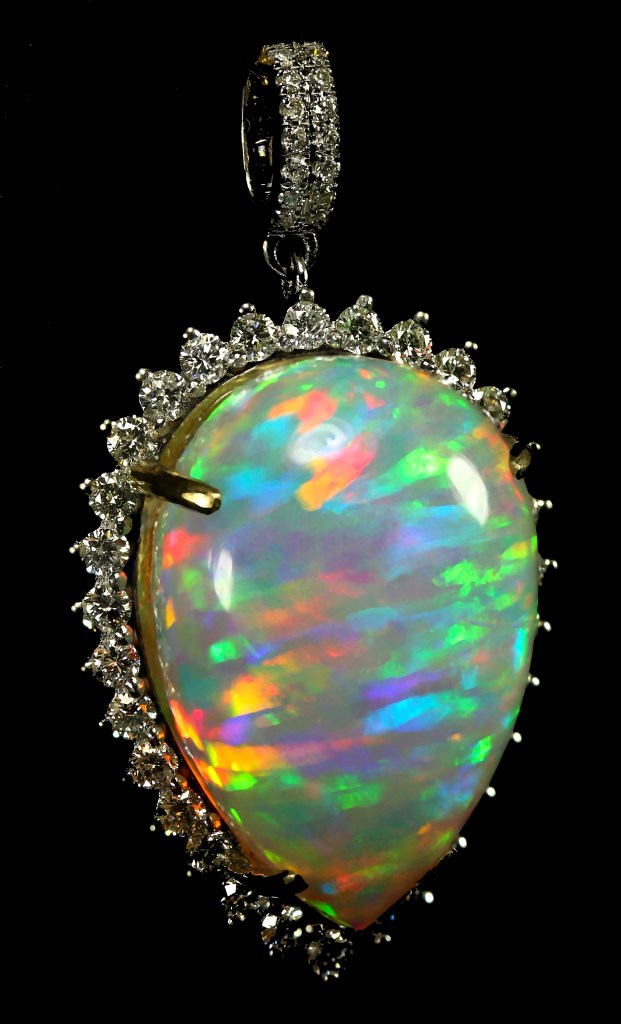
The ancient Romans believed the opal was a symbol of love and purity, but only the rich and powerful could afford to own opals. Roman politician and general Marc Antony had a soft spot for opal. Legend has it that he gave an opal worth 2,000,000 sesterces, or about 45 million US dollars in today’s money, to his lover, Cleopatra.
Great Roman Naturalist and author of the world’s first encyclopedia, Pliny wrote of the opal:
There is in them a softer fire than in the carbuncle (ruby),
there is the brilliant purple of the amethyst;
there is the sea-green of the emerald—
all shining together in incredible union.
Some by their refulgent splendor rival the colors
of the painters, others the flame of burning sulfur
or of fire quickened by oil.
Medieval Opal
In the Middle Ages, opal was considered a stone that could provide great luck because it was believed to possess all the virtues of each gemstone whose color was represented in the color spectrum of the opal. It was also said to grant invisibility if wrapped in a fresh bay leaf and held in the hand. As a result, the opal was seen as the patron gemstone for thieves during the medieval period.
Opal was also thought to be singularly protective of the honor and nobility of the Roman Emperor. Albertus Magnus, who some have referred to as the greatest German philosopher and theologian of the Middle Ages, called the opal orphanus and described it as follows:
The orphanus is a stone which is in the crown of the
Roman Emperor, and none like it has ever been seen;
for this very reason it is called orphanus.
It is of a subtle vinous tinge, and its hue is as though
pure white snow flashed and sparkled
with the color of bright, ruddy wine, and was overcome
by this radiance…It is said to guard the regal honor.
Victorian Opal: The Myth of the Unlucky Opal
Opals are the chosen birthstone for October, but some folklore suggests they bring misfortune to those born in other months. The old superstition that opals are unlucky follows from the novel “Anne of Geierstein” written by Sir Walter Scott. The novel tells the story of Lady Hermione who wore an enchanted opal in her hair. The opal sparkled when she was happy and shot out red beams when she was angry. Finally, when a few drops of holy water fell onto the opal, the enchantment dissolved, and the opal became dull. Likewise, Lady Hermione fell into a swoon and later vanished into a pile of ashes.
After the publication of this novel in 1829, the sale of opals fell by more than 50%. Opals regained widespread popularity after its discovery in 1869 in Australia.
It is said that those who gaze for a long time and without interruption on a crystal ball or onto an opal may become partially hypnotized or even fall into a profound sleep.
Australian opal: the Creator’s Gemstone
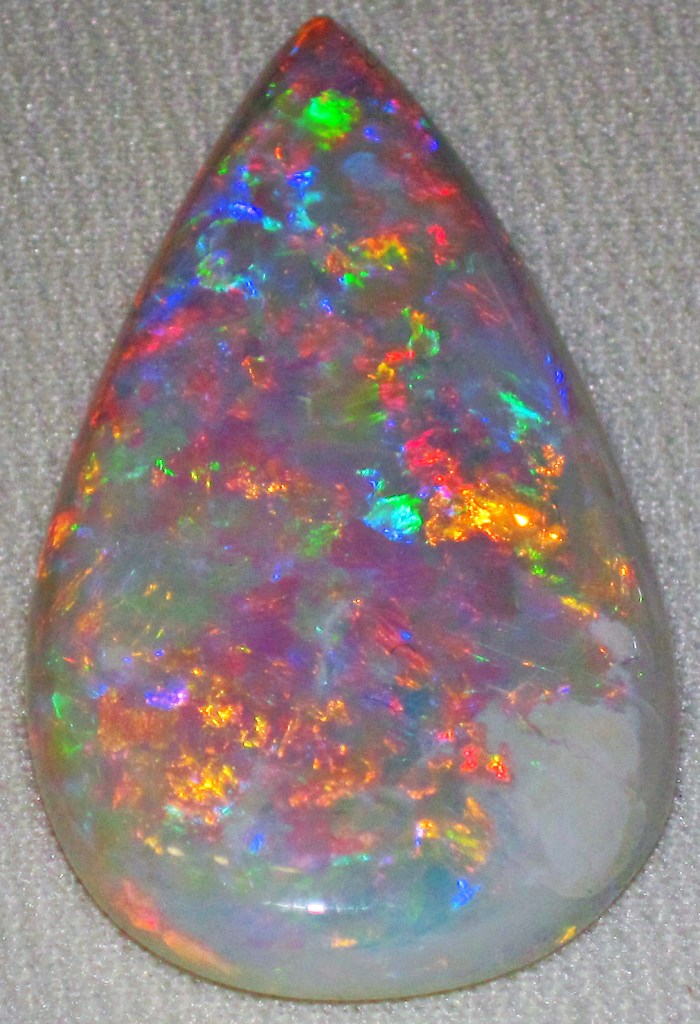
Opals hold significant cultural and spiritual importance in the mythology of the Aboriginal communities of Australia.
Aboriginal elders say that when the earth was covered with water, the great creative spirit called Garray created the rainbow to show his great love for Balirrpalirr, the spirit of mankind. The evil spirit called Mokuy was jealous of this love and caused a terrible drought so that the rainbow would never be seen by the beloved Balirrpalirr. Clever Garray placed the rainbow inside the stone and hid it in the ground, as a gift for future generations to search for and find. Mokuy looked everywhere but could not find the rainbow. The stone Garray placed the rainbow in, the opal, represents the spirit of mankind and is called the Garray Gunda, the Creator’s Gemstone.

 Flora Jewels


.jpg)