
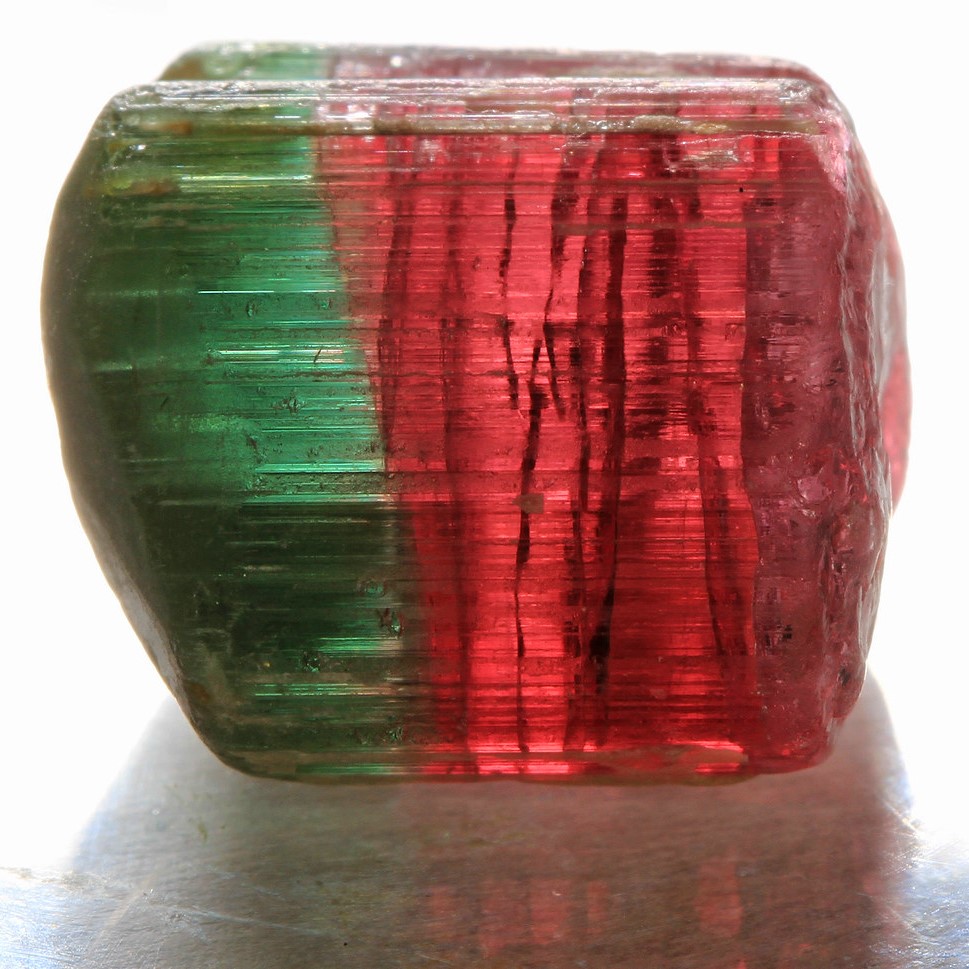
Tourmaline is actually a complex crystalline silicate mineral group in which the element boron is compounded with a number of different elements, including aluminum, iron, magnesium, sodium, lithium, or potassium. Different elements cause different colors.
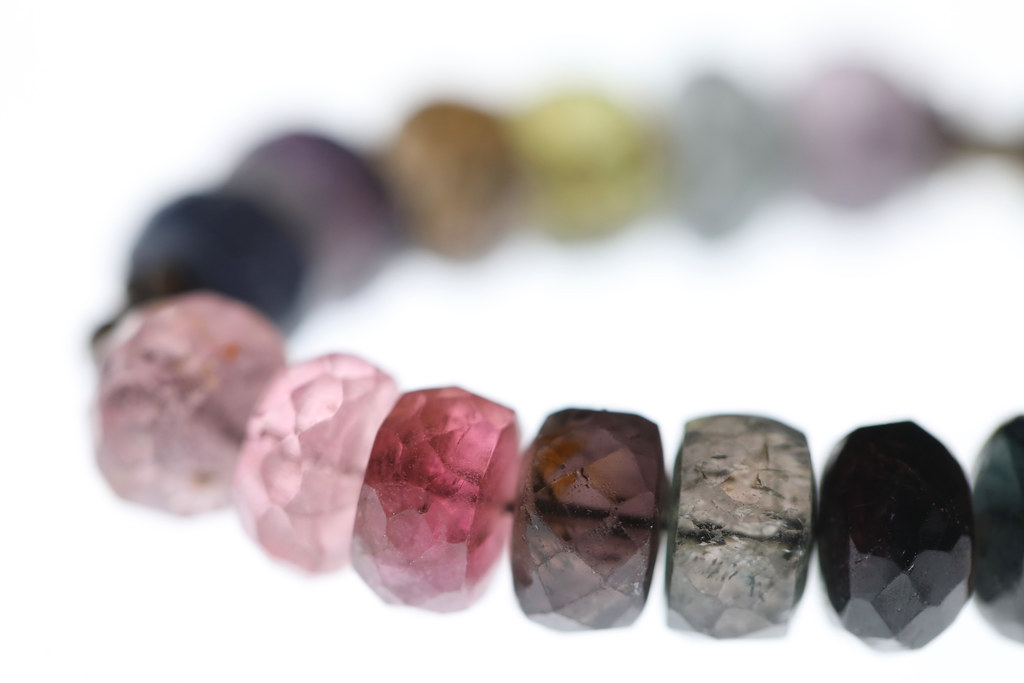
Tourmaline comes in every color of the rainbow, from black to bluish-black to deep brown, yellow, blue, green, red, yellow, pink, and colorless. Bi-colored and multicolored crystals are common. Crystals may be green at one end and pink at the other, or green on the outside and pink inside; this latter type is called watermelon tourmaline and is highly prized in jewelry. Some forms of tourmaline are dichroic and will change color when viewed from different directions.
Tourmaline derives its name from the Sinhalese word tōramalli which means “colored stones”. But the different colors of tourmaline also have their own names. Some common colors and names of tourmaline include:
- Brownish-black to black is called schorl and is colored by the inclusion of iron.
- Dark yellow to brownish-black is called dravite and is colored by the inclusion of magnesium.
- Red or pinkish-red is called rubellite and is colored by the inclusion of lithium and by natural irradiation.
- Light blue to bluish-green is called indicolite (from the word indigo).
- Blue to green is also called Paraiba and is colored by the inclusion of copper.
- Green is called verdelite and is colored by the inclusion of chrome.
- Colorless is called achroite (from ancient Greek word ákhrōmos meaning ‘colorless’)
Tourmaline in the 1500s
In the 1500s, Spanish conquistadors landed in South America and found green tourmaline, which they confused with emerald. In fact, tourmaline and its many colors were confused with many other gemstones until the 1800s when the mineral composition if tourmaline was finally discovered.
Tourmaline in the 1600s
As early as the 1600s, the Dutch East India Company brought to Europe great quantities of brightly colored Ceylonese tourmalines. Sometimes tourmaline was called the “Ceylonese Magnet” because it could attract and then repel hot ashes due to its pyroelectric properties.
Tourmaline in the 1800 and 1900s
Some fine tourmaline deposits have been found in the United States, with the first discoveries in 1822, in the state of Maine. California became a large producer of tourmaline in the early 1900s. The Maine deposits produce crystals in raspberry pink-red as well as minty greens. The California deposits are known for bright pinks, as well as bicolors. During the early 1900s, Maine and California were the world’s largest producers of gem tourmalines.
The Empress Dowager Cixi of China, who effectively ruled China from 1861 to her death in 1908, loved pink tourmaline and bought large quantities for gemstones and carvings from the then new Himalaya Mine, located in San Diego County, California. In fact, the tourmaline trade with China was so important that when the Chinese Dynasty fell in the early 1900s, so did the tourmaline trade with America.
Native Americans have used pink and green tourmaline as funeral gifts for centuries.
Tourmaline Symbols
Tourmaline is an official birthstone for those born in the month of October and a gemstone gift for the 8th wedding anniversary.

 Flora Jewels