
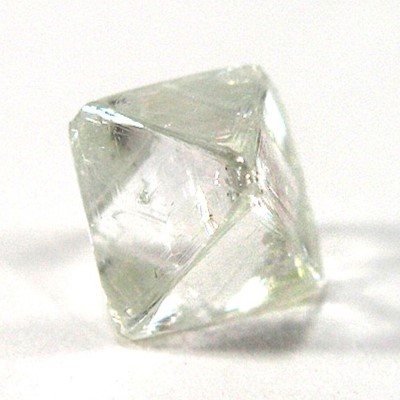

Deriving its name from the Greek word adamas meaning “unconquerable,” diamond is 140 times more durable than ruby and sapphire.
In ancient times, diamond was not valued as a decorative stone but as a stone used for cutting and shaping other stones.
Ancient Greek philosopher and author of the first encyclopedia of natural history, Pliny the Elder, wrote of diamond’s hardness:
The most valued of human possessions, let alone gemstones, is the adamas. Indeed the hardness of the adamas is indescribable…. Hence it derives its name, because, according to the meaning of the term in Greek it is the “unconquerable force.”
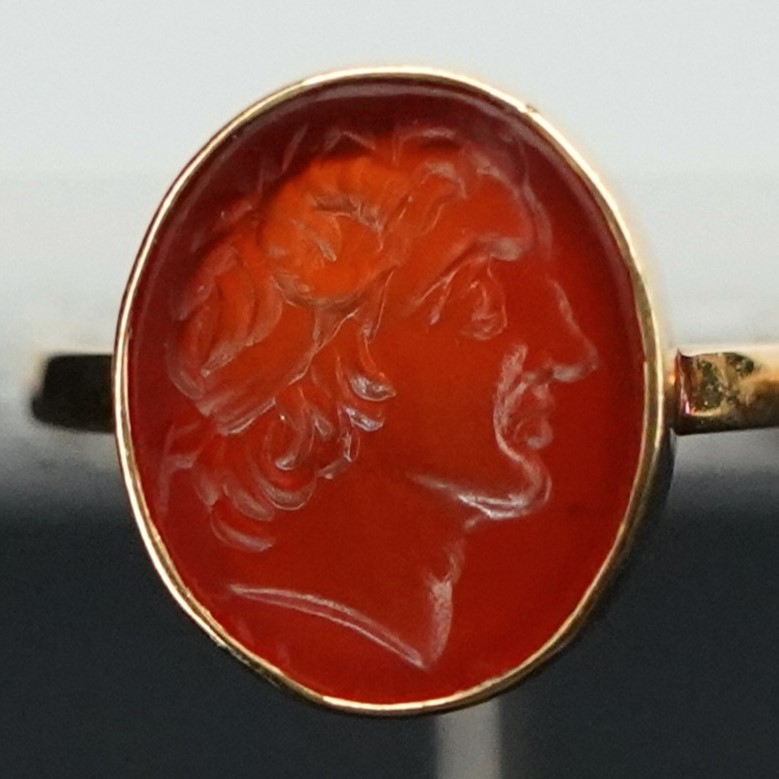
Diamond Powder
Diamond powder was used since the time of Alexander the Great as an abrasive to carve and polish other hard gemstones, such as sapphire and carnelian.
Diamond powder, which was made in India and packed in oil, was an expensive commodity that was widely traded along ancient trade routes.
The Briolette of India
One of the most infamous of all the great diamonds, the 90+ carat Briolette of India, may be the oldest diamond in history.
The Briolette of India: Richard the Lionheart
The long history of the Briolette of India begins with Richard the Lionheart, who reigned in England from 1189 to 1199 AD. King Richard I was no doubt a believer in the great protective properties of the diamond, later written of by Albertus Magnus, but rather than protecting its owner from harm, the Briolette left a trail of tragedy.
The Briolette of India: Trail of Tragedy
In 1190, Richard I embarked on the First Crusade to the Holy Land, and, for good luck, he brought the Briolette along. On his way to Jerusalem he became ill and had to stop to rest.
While he was away his brother John seized power in England. At an impasse with the Turks and too sick to go on, he turned back to England, without having seen Jerusalem.
On the way back home, he was captured by the Duke of Austria and locked up, as an enemy of the German empire. After two years Richard was finally released to go back to England.
After carrying the Briolette for nearly a decade and losing power, surviving illness, capture, and imprisonment, Richard the Lionheart was fatally wounded while fighting in France.
At this time, it is believed that the Briolette was stolen and landed in the French royal treasury.
The Briolette of India: 800 Years of Mystery
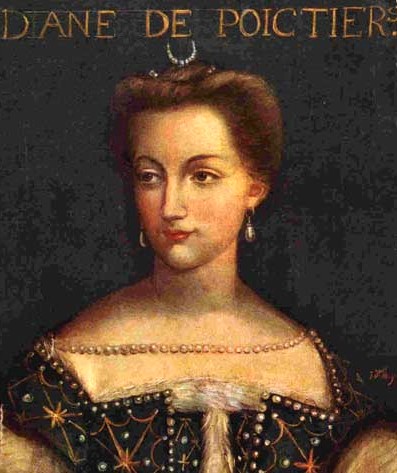
Four Hundred years later we see a glimpse of the Briolette in a portrait of Diane de Poitiers, who was a beautiful young mistress of Henry II of France.
The Briolette of India disappeared again for another 400 years. It finally reappeared in 1950 when New York jeweler Harry Winston bought it from an Indian Maharajah.


 Flora Jewels

