
The Bavarian Lover’s Knot Tiara
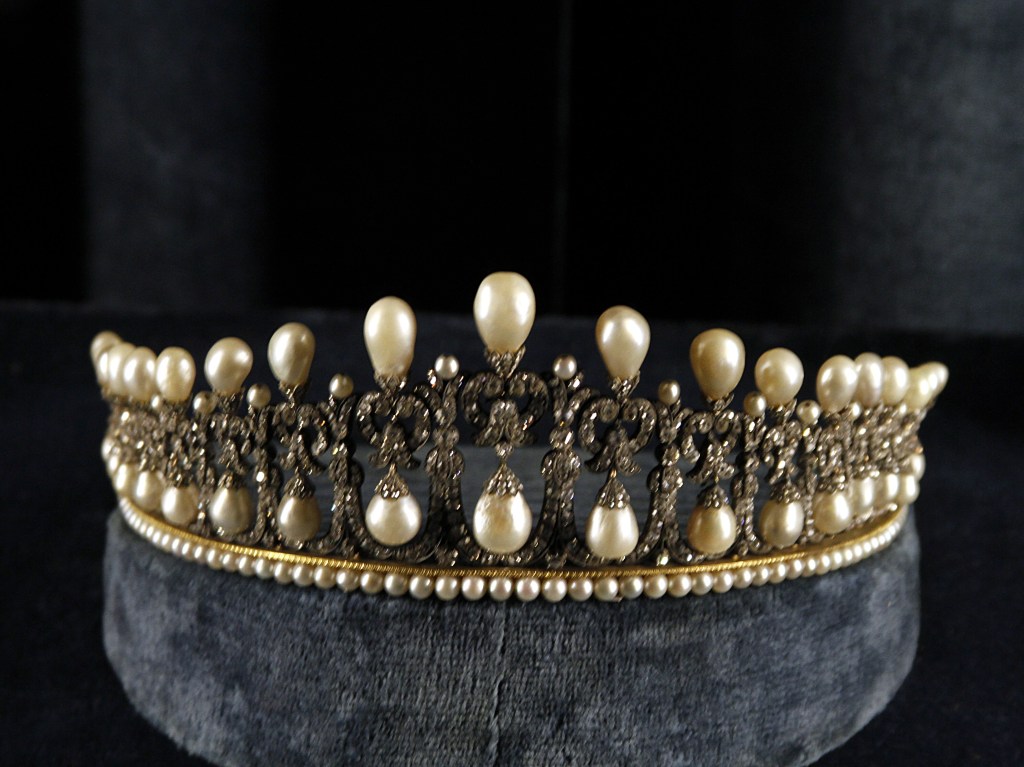
Queen Therese of Bavaria (1792–1854), wife of King Ludwig I, reigned as Queen of Bavaria and is immortalized through the annual celebration of Oktoberfest, originally created to commemorate their wedding.
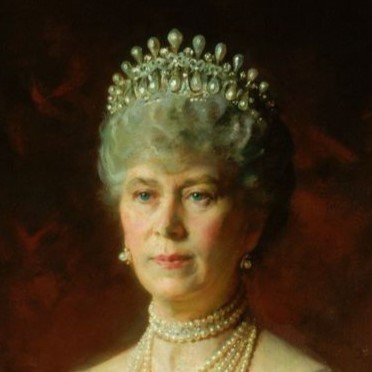
Queen Therese had a profound affection for pearls, and her exquisite jewelry collection prominently featured the Bavarian Lover’s Knot Tiara. Crafted in 1825, the year she ascended to queenship, this stunning piece showcases a design reminiscent of the renowned Cambridge Lover’s Knot Tiara and its replica, Queen Mary’s Lover’s Knot Tiara.
Therese bequeathed the tiara to her daughter-in-law, Duchess Amalia of Oldenburg, who married Therese’s second son, Otto, later crowned King of Greece in 1832. Following their deposition three decades later, Queen Amalia brought the tiara back to Bavaria, where it has remained a cherished heirloom ever since.
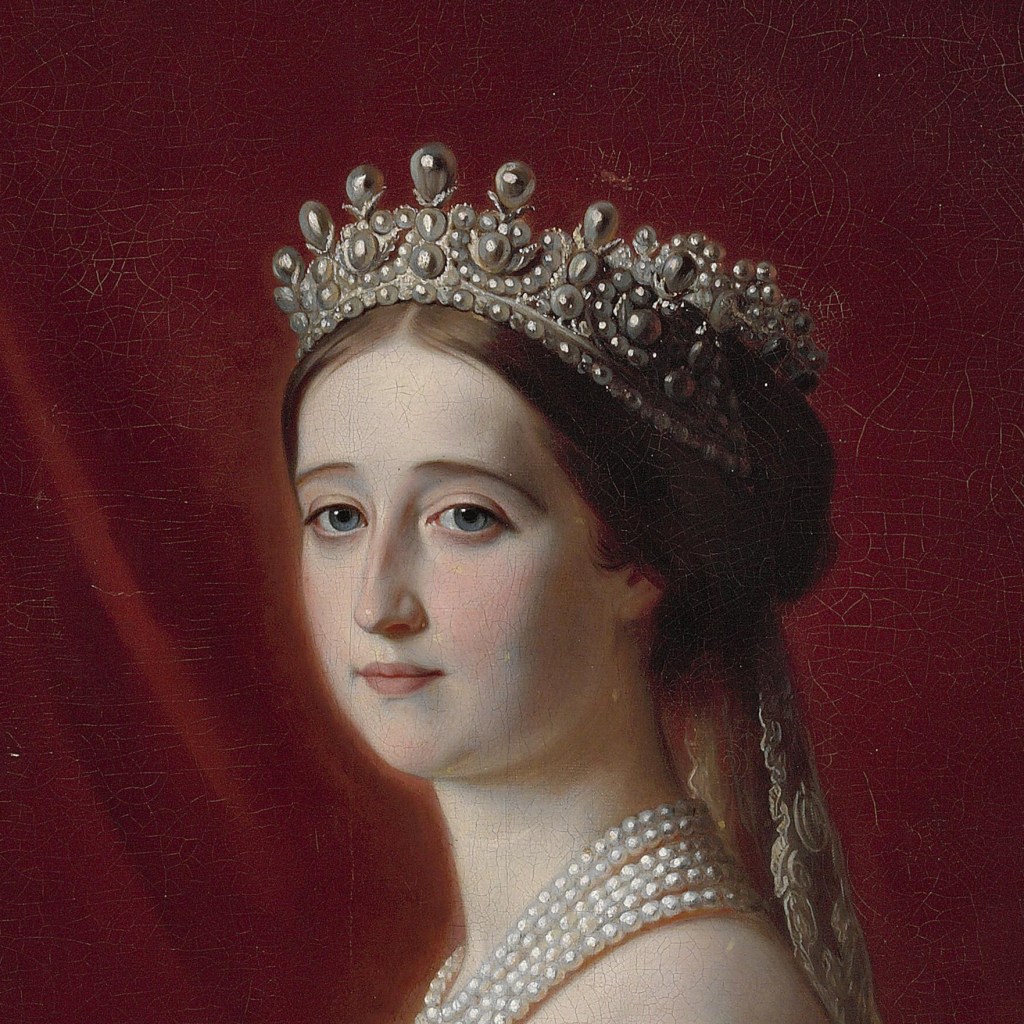
Empress Eugénie’s Pearl Diadem
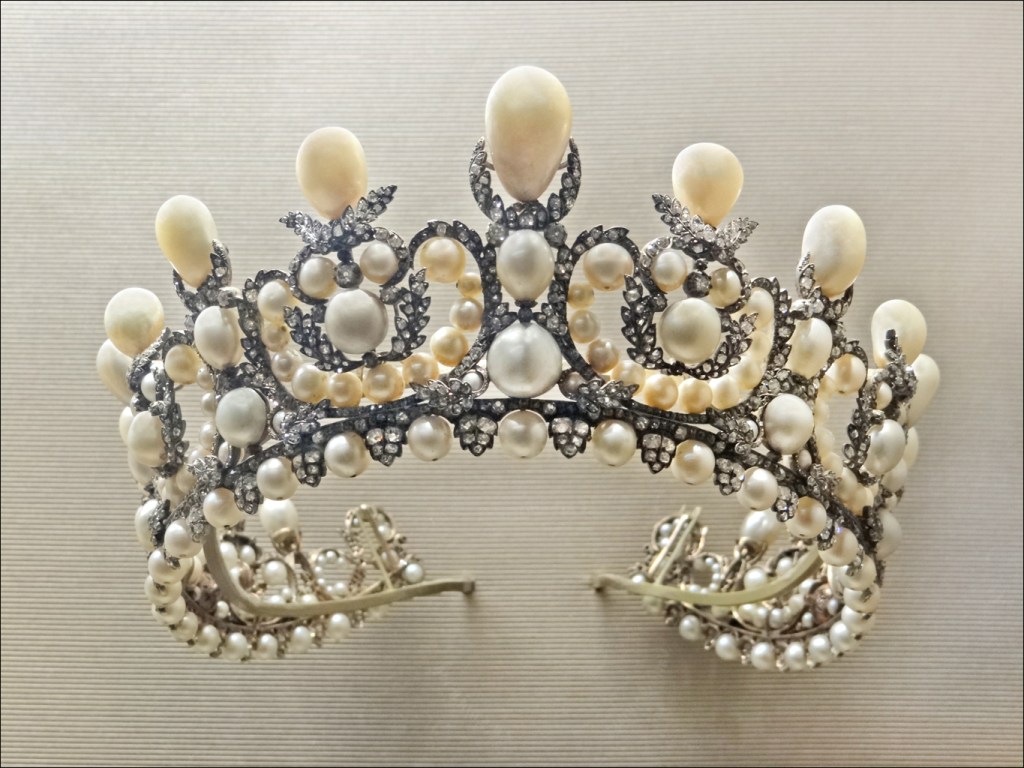
In 1853, Napoleon III commissioned Gabriel Lemonnier to craft a monumental pearl diadem as a wedding gift for his bride, Eugénie de Montijo. This exquisite piece, set in silver, features 212 pearls and nearly 2,000 diamonds arranged in intricate foliage scrolls, crowned with upright pear-shaped pearls.
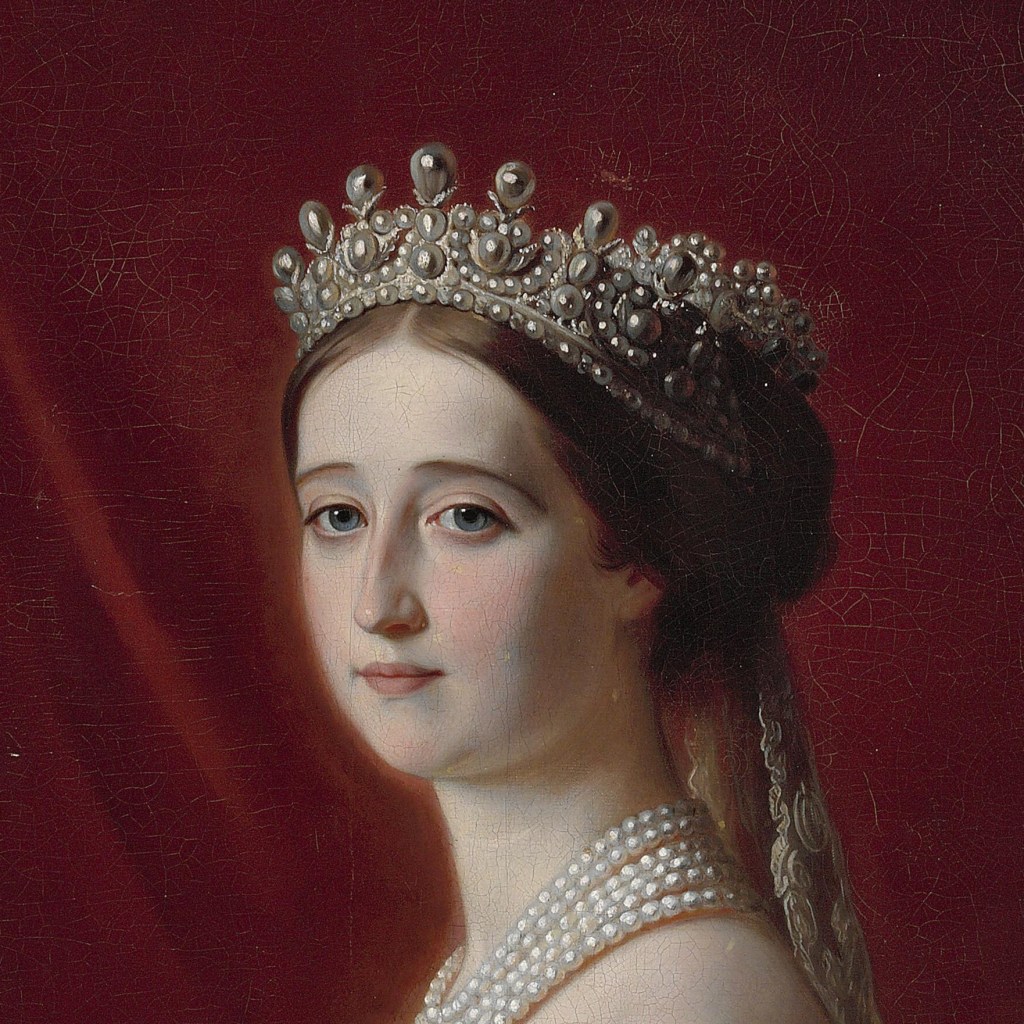
Following Napoleon’s defeat by Prussia in 1870, he and Empress Eugénie sought exile in England under the hospitality of Queen Victoria. The diadem, however, was returned to the French state and subsequently auctioned in 1887, where it was acquired by Tiffany & Co.
In 1890, the diadem found a new home when Albert, the 8th Prince von Thurn und Taxis, purchased it as a wedding gift for his future bride, Archduchess Margarethe Klementine of Austria. The Thurn und Taxis family, German nobility, had amassed a vast fortune through their pioneering role in establishing the European postal service.
The diadem resurfaced in 1980 at the wedding of Johannes, the 11th Prince of Thurn und Taxis, to Countess Gloria von Schönburg-Glauchau. At just 20 years old, Gloria’s husband was 34 years her senior. Known for her extravagant style and dubbed the ‘Punk Princess,’ Gloria made a memorable appearance at the Prince’s 60th birthday party, descending on a golden cloud attached to a zip wire, dressed as Marie Antoinette.
Upon the Prince’s death in 1992, Gloria, facing a £300 million debt, transformed into a devout Catholic businesswoman determined to repay the family’s financial obligations. Consequently, the precious diadem was auctioned once more and purchased by Friends of The Louvre. Today, it remains on display, reunited with its homeland, a testament to its storied legacy.

 Flora Jewels


_(7166066743).jpg)
